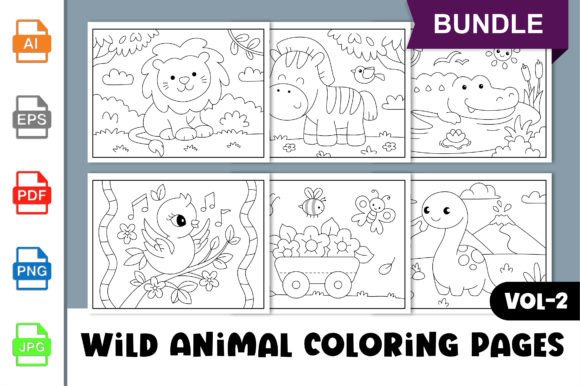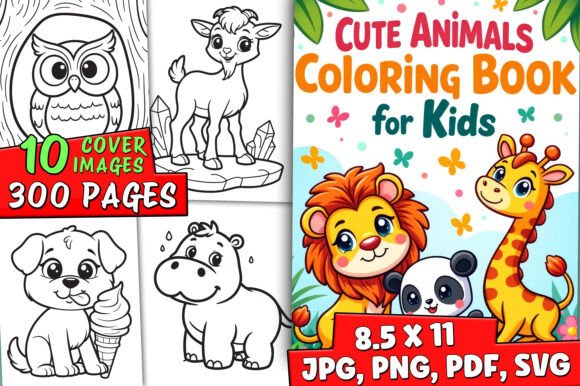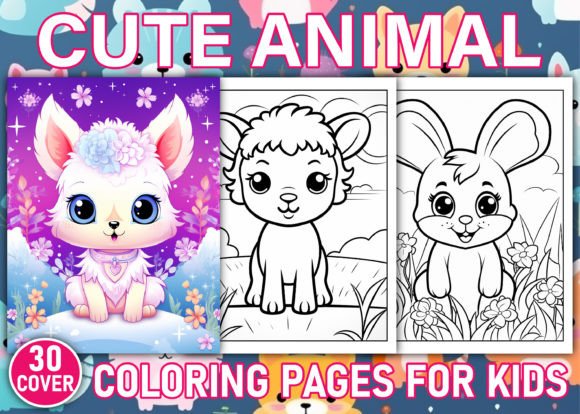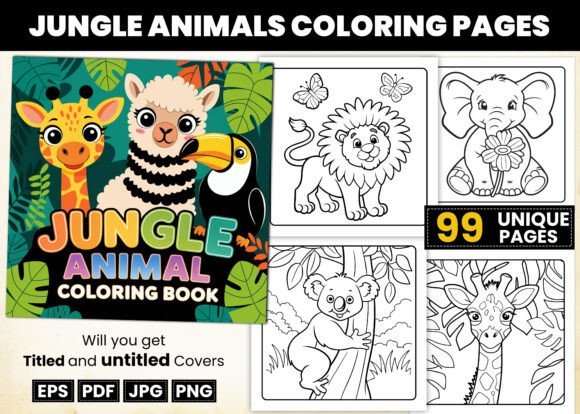
100 Wild Animal Coloring Pages for Kids: Creative Design Assets
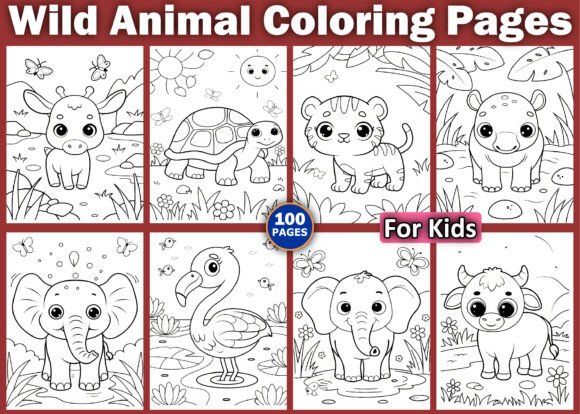
When working on projects aimed at younger demographics, finding the right balance between simplicity and engagement is crucial. The 100 Wild Animal Coloring Pages for Kids collection offers a distinct visual language characterized by playful energy and accessible design. This isn't just a random assortment of sketches; it is a curated set of clean vector art illustrations featuring lions, elephants, giraffes, monkeys, tigers, and zebras. The style relies on simple outlines and uncluttered backgrounds, which serves a dual purpose. For the end-user, it makes coloring intuitive for little hands, but for the designer or entrepreneur, it provides versatile design assets that can be adapted for various media without visual noise.
The personality of these illustrations is inherently friendly and approachable. Unlike complex, hyper-realistic wildlife renderings, these pages use bold strokes and open spaces. This visual clarity is a significant advantage when creating brand identity materials for daycare centers, pediatric clinics, or family-oriented blogs. The aesthetic avoids the overly "babyish" look that can sometimes alienate parents, opting instead for a modern, clean style that feels professional yet whimsical. If you are looking to inject a sense of joy and curiosity into a project, this collection provides the visual shorthand needed to communicate that instantly.
Strategic Applications for Branding and Marketing
For entrepreneurs and marketers, these pages are more than just coloring sheets—they are content goldmines. In the realm of social media graphics, static posts often struggle to compete with video. However, interactive content wins. A business focused on children's products could use these animal designs as downloadable freebies to grow an email list or encourage user-generated content (e.g., "Color this monkey and tag us to win a prize!"). The high-resolution nature of the files ensures that whether you are posting a small Instagram square or a Pinterest pin, the lines remain crisp and professional.
Furthermore, these assets are invaluable for packaging design. Imagine a brand of organic snacks for kids or a natural soap line. The animal motifs can be used as spot illustrations on boxes, wrappers, or tissue paper. Because the collection includes 100 Wild Animal Coloring Pages for Kids, you have a wide variety of species to choose from, allowing you to create a cohesive "zoo" theme or select specific animals that match a product's flavor or color palette. This versatility helps in building a recognizable visual system without the need to commission expensive custom illustration work from scratch.
Technical Specifications and Print Versatility
A common frustration with digital assets is compatibility and quality degradation during printing. This collection addresses those pain points directly. The files are delivered in .PDF + PNG + JPG format at a resolution of 300 DPI. For those of us in publishing and print design, we know that 300 DPI is the industry standard for high-quality output. Whether you are printing on standard office paper or high-quality cardstock for a coloring book product, the result will be sharp and professional.
The specific dimensions of 8.5" x 11" inch with bleed make these files "print ready" for the North American standard letter size. This saves significant time in pre-press preparation. You won't need to spend hours adjusting margins or worrying about cutting off an elephant's trunk at the edge of the page. For self-publishers creating activity books or educators preparing classroom materials, this technical readiness is a massive workflow booster. The inclusion of vector-style clean lines also means that if you need to scale the images slightly for different formats, the integrity of the artwork holds up better than rasterized, noisy images.
Integrating Illustrations into Editorial and Web Design
In editorial design, particularly for blogs, magazines, or newsletters focused on parenting, education, or travel, breaking up text walls is essential for reader retention. These animal illustrations serve as excellent spot art or section dividers. Using a playful tiger or a curious giraffe to introduce a new section of an article adds a layer of visual storytelling that keeps the reader engaged. It softens the reading experience and adds personality to the publication.
For web design, these assets can be utilized as background textures, loading screen animations (if converted to SVGs), or 404 page graphics. A 404 error page featuring a confused monkey is a classic UX pattern that turns a moment of frustration into a smile, maintaining brand affinity even when something goes wrong. Because the collection is extensive, you can rotate the animals seasonally or use different species for different categories of your website, ensuring the visual experience remains fresh for returning visitors.
Practical Guidance for Implementation
When incorporating the 100 Wild Animal Coloring Pages for Kids into your workflow, consider the context of your font pairing. While these are images, not typefaces, the visual weight of the illustrations must complement your typography. The outlines are generally medium-weight, so they pair well with sans serif fonts for a modern, clean look, or rounded handwritten fonts for a more casual, nursery-rhyme feel. Avoid pairing them with overly ornate script fonts or heavy serif fonts, which can clash with the simplicity of the line art.
Finally, consider the commercial aspect. These assets are designed to be flexible. Whether you are a small business owner creating flyers for a local event, a crafter making party decorations, or a publisher compiling a book, the high-resolution, organized nature of the files supports a smooth creative process. By leveraging the distinct, friendly style of these illustrations, you can elevate your project's visual appeal, making it more engaging for children and more trustworthy for the adults who make the purchasing decisions.